21 Skincare Product Photography Ideas That Actually Convert (2026)
Skincare is one of the most photographed product categories online. Here are 21 ideas that will make your serums, creams, and bottles stand out in a crowded feed.
Skincare is one of the most competitive product categories in ecommerce. Your serum bottle is competing with thousands of other serum bottles in the same Instagram feed, on the same Amazon search page, in the same Shopify collection. The difference between a product photo that converts and one that scrolls past is often the photography concept - the backdrop, the props, the lighting, the mood. Here are 21 skincare product photography ideas that actually work in 2026, organized by the brand mood they create.
Minimalist & Clean (for clinical/lab-positioned brands)
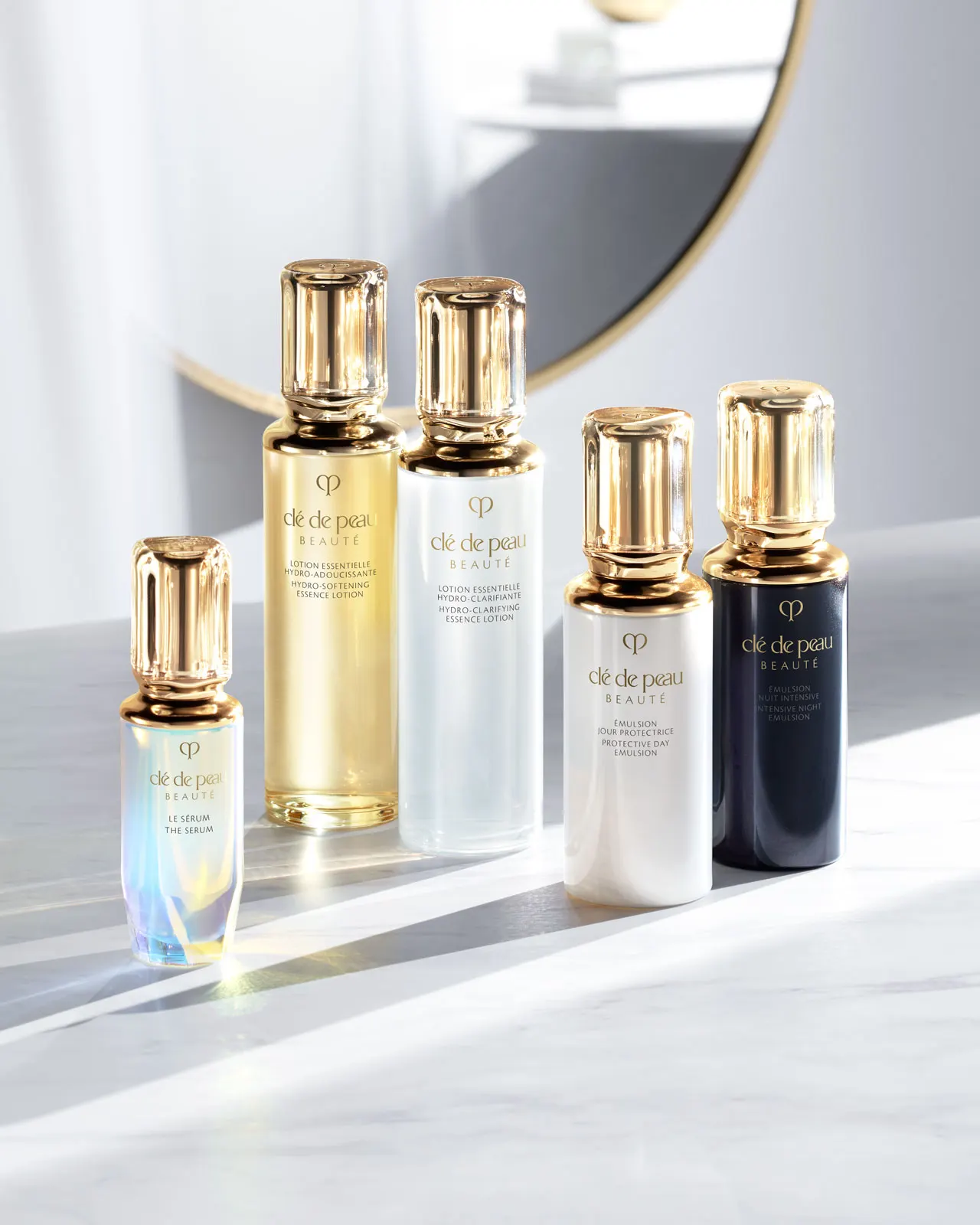
1. Pure white sweep with soft shadow
The classic catalog shot. Your product on a seamless white background with a single soft shadow. Required for Amazon, good for Shopify. The trick: get the shadow soft and long (light from the side), not harsh and short (light from directly above). This is your workhorse - every product needs one of these.
2. Frosted glass surface
Place your product on a sheet of frosted glass (or acrylic) over a white surface. The frosted glass creates a soft, slightly diffused reflection that looks premium without being distracting. Lighting from below through the glass creates an ethereal glow.
3. Single ingredient prop
If your product has a hero ingredient (rosehip oil, vitamin C, hyaluronic acid), place one sprig or slice of that ingredient next to the bottle. A single rosehip next to a rosehip serum bottle communicates the ingredient story instantly. Use one prop - not three - to keep it clean.
4. Lab-style flat lay
Shoot straight down on a white surface with your product plus 2–3 'lab' elements: a glass dropper, a petri dish, a white tile. This positions your brand as science-backed and clinical. Works well for skincare brands that want to emphasize efficacy over luxury.
Luxury & Premium (for high-end beauty brands)
5. Marble surface with warm light
White or grey marble is the universal shorthand for luxury in beauty photography. Place your product on a marble slab, light from the side with warm (2700K–3000K) light, and you instantly look like a $80+ product. The marble's natural veining adds visual interest without competing with the product.
6. Silk or satin drape
Drape a piece of silk or satin (silk scarf, satin pillowcase) and place your product on it. The fabric's sheen catches light beautifully and communicates luxury. Best colors: champagne, blush, deep navy, or black. Avoid bright colors that compete with the product.
7. Black background with single light
A black background with a single, dramatic light source from one side creates a moody, editorial look. This is the beauty equivalent of a fashion magazine cover shot. Harder to execute (you need complete light control) but very striking. Works especially well for packaging that's already dark or metallic.
8. Gold or brass accents
A small brass tray, a gold-rimmed mirror, or a brass letter opener as a prop adds instant luxury. The key is restraint - one gold accent, not a gold-themed set. The gold should catch light and add a warm metallic reflection, not dominate the frame.
Natural & Botanical (for clean/organic brands)
9. Fresh botanicals as backdrop
Eucalyptus sprigs, fern fronds, or fresh herbs arranged behind and around your product. This signals 'natural ingredients' and works for clean beauty brands. Use fresh (not dried) botanicals and shoot quickly - they wilt fast under hot lights.
10. Wood surface with linen
A light wood surface (maple, birch) with a linen cloth creates a warm, natural, slightly Scandinavian mood. Good for brands positioned as 'clean,' 'organic,' or 'small-batch.' Avoid dark woods (walnut, mahogany) - they read as traditional rather than modern-natural.
11. Stone or concrete surface
A raw concrete or stone surface gives your product a modern, architectural feel. The texture of the stone contrasts beautifully with smooth glass and plastic packaging. This is a good alternative to marble if you want luxury without the 'traditional beauty' connotation.
12. Water droplets and wet look
Mist your product with water (or place it on a surface with water droplets) to communicate freshness and hydration. Especially effective for hydrating products (moisturizers, hyaluronic acid serums, mists). Use a spray bottle for even droplets - don't pour water on your product.
Lifestyle & Storytelling (for DTC and social)
13. Bathroom shelf flat lay
Your product on a bathroom shelf or counter next to 2–3 other objects (a folded towel, a small plant, a jar of cotton pads). This helps customers imagine the product in their daily routine. Keep the other objects neutral - you don't want them competing with your product.
14. Hand holding the product
A hand (clean, well-manicured, ideally with neutral nail polish) holding the product is one of the most effective skincare photography compositions. It shows scale, it's instantly relatable, and it performs well on social. If you don't have a model, use your own hand - just make sure it's clean and moisturized.
15. Application moment
Capture the moment of application - a dropper dispensing serum, cream being squeezed onto fingertips, mist being sprayed. These 'action' shots perform extremely well on social because they show the product in use. Use a fast shutter speed (or burst mode on iPhone) to freeze the motion.
16. Morning routine sequence
A series of 3–4 images showing a morning routine: cleanser, toner, serum, moisturizer. Shoot all four on the same surface with the same lighting for consistency. This works as a carousel post on Instagram or a product collection image on Shopify.
Seasonal & Campaign (for limited editions and holidays)
17. Holiday red and gold
A red satin or velvet surface with gold accents (gold ribbon, gold tray) instantly reads as holiday. Useful for Q4 campaigns and gift sets. Don't overdo it - one red element and one gold element is enough. Too much reads as cheesy.
18. Summer beach scene
Your product on sand, with a faded ocean background, maybe a piece of coral or a shell. Works for SPF products, summer-limited editions, or tropical-ingredient stories. The challenge: sand gets everywhere and saltwater damages packaging. Consider shooting on a sand-colored surface with a printed ocean backdrop instead.
19. Autumn leaves and warm tones
Dried autumn leaves (or fresh ones in season) in amber, rust, and brown tones. Pairs well with skincare that has autumnal ingredients (pumpkin enzyme, cinnamon, cranberry). The warm color palette is cozy and seasonal without being holiday-specific.
Conceptual & Creative (for ad creative and social)
20. Oversized product in miniature world
Your product rendered as a giant monument in a miniature landscape - tiny farmers harvesting around a colossal probiotic bottle, or a massive serum bottle towering over a tiny city. This is the kind of creative that stops the scroll on social. It's nearly impossible to shoot physically but straightforward with AI generation (this is one of the concepts KromaSet generates well).
21. Product emerging from nature
Your product emerging from a wave, a cloud, a flower bloom, or a pile of fruit. These surreal, conceptual compositions are great for ad creative because they're visually striking and they communicate a product benefit metaphorically (a hydrating serum emerging from a wave = hydration). Again, this is where AI generation shines - these scenes are either impossible or prohibitively expensive to shoot physically.
Lighting tips for skincare photography
Regardless of which concept you choose, these lighting principles apply to all skincare photography:
- Use soft, diffused light - direct light creates harsh reflections on glass and plastic packaging that look amateur.
- Light from the side (90 degrees) for drama and texture; light from slightly above and to the side (45 degrees) for a natural, flattering look.
- Avoid mixed color temperatures - don't combine window light (cool/blue) with tungsten light (warm/orange). Pick one and stick with it.
- Use a fill card (white foam board) on the shadow side to soften contrast - skincare packaging often has reflective surfaces that go too dark without fill.
- If using artificial light, use a single large softbox rather than multiple small lights. One light source = natural look; multiple light sources = studio look (which can feel dated for beauty).
The AI shortcut
Here's the honest truth: executing most of the 21 ideas above with physical photography requires buying surfaces, props, backdrops, and lighting equipment - and then storing all of it. For a skincare brand launching 10 products, that's a significant investment in both money and space.
AI product photography tools let you execute most of the 21 ideas above from a single clean product photo - including the conceptual scenes in #20 and #21 that would be impossible or prohibitively expensive to shoot physically. The three exceptions are ideas #14, #15, and #16, which involve real application moments (a hand holding the product, a dropper dispensing serum, a multi-step routine). Those specific shots still benefit from real photography, though tools like KromaSet can generate model-in-scene compositions that work for ad creative. You upload one image, pick a concept, and the tool generates the scene. This lets you test multiple photography concepts per product without buying any physical props - and you can generate seasonal variants (holiday, summer, autumn) on demand without re-shooting.
The workflow that works best: take one excellent clean product photo (idea #1, pure white sweep) as your source image, then use an AI tool like KromaSet to generate variations across the 17 other AI-friendly concepts. You get the quality of a real product photo with the variety of 17 different shoots.
References & Further Reading
- How to Take Product Photos with an iPhone (2026 Beginner's Guide)
The technical foundation: lighting, camera settings, and editing for clean skincare shots.
- AI Background Generator for Product Photos: Complete 2026 Guide
How to generate the marble, studio, and lifestyle backdrops mentioned in ideas #5, #6, and #9.
- 11 Best AI Product Photography Tools in 2026 (Tested & Compared)
Which AI tools handle skincare bottles best, based on our hands-on testing.
- Pebblely: Beauty & Skincare Product Photography Ideas
Pebblely's own collection of beauty product photography ideas, with AI-generated examples.
- Mainstream Multimedia: 21 Skincare Product Photo Ideas
Another take on skincare photography ideas from a product photography studio.
Upload one skincare product photo to KromaSet and generate variations across all 21 concepts in minutes. Free on the App Store for iPhone and iPad.
Try it in KromaSet
Upload a product photo and generate your first ad creative in minutes. Free on iOS.